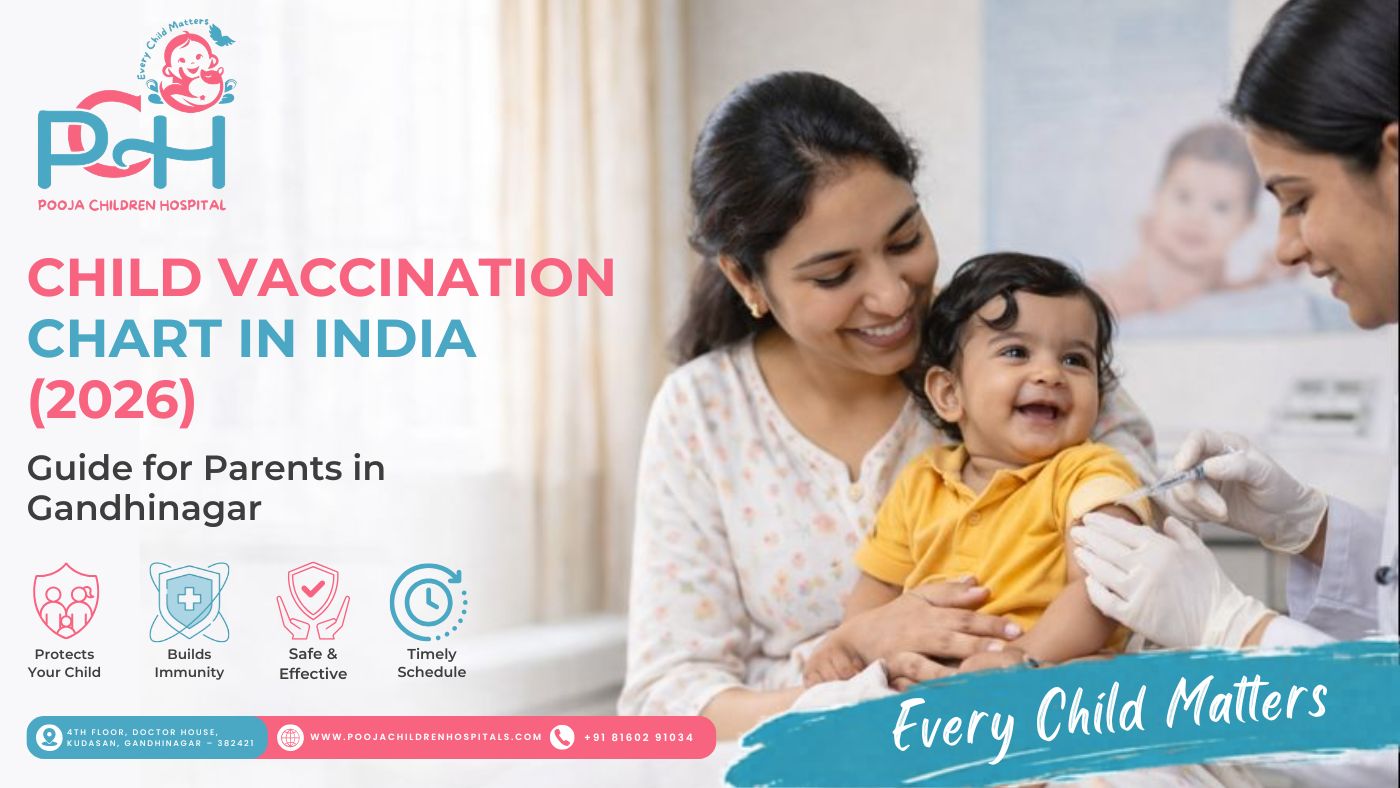
As a parent, ensuring your child receives the right vaccines at the right time is one of the most important steps you can take for their long-term health. Childhood immunizations protect against serious diseases like polio, tuberculosis, measles, and diphtheria, building immunity before your child is exposed to these illnesses. This child vaccination chart in India (2026) is crafted especially for parents in Gandhinagar, helping you understand the vaccination schedule for children, why each vaccine is given, common side effects, guidance for missed child vaccination doses, and how to easily book a vaccination appointment at Pooja Children Hospital’s services.
At Pooja Children Hospital, we are committed to supporting families with accurate information and expert pediatric care, including age-appropriate childhood vaccinations in a friendly, safe environment. Our goal is to make vaccination easy and stress-free for every parent.
- What Is a Child Vaccination Chart?
A child vaccination chart (also known as a vaccination schedule for children) is a timeline that shows which vaccines your child needs at specific ages from birth through adolescence. This schedule ensures your child develops immunity at the most effective times. Immunization helps prevent severe illnesses and reduces the risk of outbreaks in the community.
- Age-Wise Child Vaccination Chart in India (2026)
Below is the commonly recommended immunization schedule followed under India’s Universal Immunization Programme (UIP) as well as recommendations from paediatric associations:
Vaccination Chart (Birth to 18 Years)
Age | Vaccines & Purpose |
At Birth | BCG: Prevents tuberculosis (TB); OPV-0: Oral polio protection; Hepatitis B (birth dose): Liver protection |
6, 10 & 14 Weeks | DPT/DTaP: Diphtheria, Tetanus, Pertussis; OPV/IPV: Continued polio protection; Hib: Protects against Haemophilus influenzae infections; Rotavirus: Prevents severe diarrhoea |
6-9 Months | OPV booster (some schedules include additional doses) |
9 Months | Measles-Rubella (MR-1): Prevents measles and rubella |
15-18 Months | MR-2: Second dose for strengthened immunity; DPT booster & OPV booster |
5–6 Years | DPT Booster-2 & OPV booster |
10 Years | Td (Tetanus & Diphtheria) |
16 Years | Td Booster |
(Note: Some vaccines such as Typhoid Conjugate Vaccine, Hepatitis A, Pneumococcal Conjugate Vaccine (PCV), and others may be recommended based on doctor advice or local health programs.)
This vaccination chart for kids helps you track when your child needs each vaccine, making it easier to stay on schedule and avoid missed shots.
- Purpose of Each Vaccine
Understanding why each vaccine is important can help you stay confident in following the schedule:
🔹 BCG (Tuberculosis Vaccine)
Protects against severe forms of tuberculosis, especially in infants and young children.
🔹 Polio Vaccines (OPV/IPV)
Protect against polio paralysis, historically one of the most feared childhood diseases.
🔹 DPT/DTaP
Targets diphtheria, pertussis (whooping cough), and tetanus, diseases that can cause serious breathing problems and muscle stiffness.
🔹 Hib (Haemophilus Influenzae Type B)
Prevents meningitis and other Hib-related infections.
🔹 Rotavirus
Prevents severe diarrhoea and dehydration in infants.
🔹 Measles-Rubella (MR)
Protects against measles and rubella, which can lead to serious complications like pneumonia and birth defects if infection occurs during pregnancy.
🔹 Td/Tdap Boosters
Tetanus and diphtheria boosters are given in older children to maintain long-term protection.
- Common Side Effects of Child Vaccines
Most vaccines are safe, and mild reactions can be normal. Typical responses include:
- Low fever and fussiness
- Redness or pain at the injection site
- Mild swelling
These usually fade within 24–48 hours. Serious reactions are rare. If your child has a high fever, difficulty breathing, or persistent crying after vaccination, contact your pediatrician promptly.
Tip: A cool compress and plenty of fluids can help ease discomfort after shots.
- What to Do if a Dose Is Missed
Life happens, and sometimes vaccine appointments are delayed. The good news? You don’t need to start the whole schedule again. Medical guidance is clear: when a vaccine dose is missed, continue from the next due dose in the schedule. For example, if a 10-week dose was missed, resume with that dose as soon as possible and follow the recommended timeline thereafter.
This ensures your child remains protected without unnecessary repetition.
- How to Book a Child Vaccination Appointment in Gandhinagar
Booking your child’s vaccines should be simple and stress-free. At Pooja Children Hospital, we offer comprehensive pediatric care, including all essential childhood vaccinations tailored to your kid’s age and health needs.
Scheduling Tips for Parents
- Keep a printed or digital copy of your child’s MCP (Mother and Child Protection) card
- Note upcoming due dates for immunizations
- Set reminders on your phone
Following the schedule and staying organised helps ensure your child never misses a vaccine.
Conclusion
A well-maintained child vaccination chart is essential for every parent in Gandhinagar and across India. Following the vaccination schedule for children from birth to adolescence protects your child from preventable diseases and promotes healthy growth.
References: National Immunization Schedule | National Health Mission schedule
Frequently Asked Questions
- How many vaccines are given to a child in India?
In India, a child typically receives around 12 to 15 essential vaccines from birth to 18 years under the national immunization programme and pediatric recommendations. These vaccines are given in multiple doses and boosters at different ages to build long-term immunity. The exact number may vary slightly depending on your child’s health condition, location, and whether additional optional vaccines are advised by the pediatrician. Following the recommended child vaccination chart helps ensure complete protection against serious diseases.
- What are the 7 types of vaccines?
Vaccines are generally classified into seven main types based on how they are made and how they work in the body. These include live attenuated vaccines, inactivated vaccines, subunit vaccines, toxoid vaccines, conjugate vaccines, recombinant vaccines, and mRNA vaccines. In childhood immunization in India, most commonly used vaccines fall under inactivated, subunit, and conjugate categories, as they are safe and effective for infants and young children.
- WHO vaccination schedule for children?
The World Health Organization (WHO) recommends a global vaccination schedule that focuses on protecting children from life-threatening diseases such as tuberculosis, polio, measles, hepatitis B, and diphtheria. India’s national immunization schedule closely follows WHO guidelines while adapting them to local health needs. This ensures that children in India receive vaccines at the right age and in the right sequence for maximum protection.
- What is the most popular vaccination programme?
In India, the Universal Immunization Programme (UIP) is the most popular and widely followed vaccination programme for children. It is one of the largest public health programmes in the world and aims to provide free vaccines to protect children and pregnant women from preventable diseases. Along with private hospital immunization services, UIP plays a major role in improving child health and reducing infant mortality across the country.