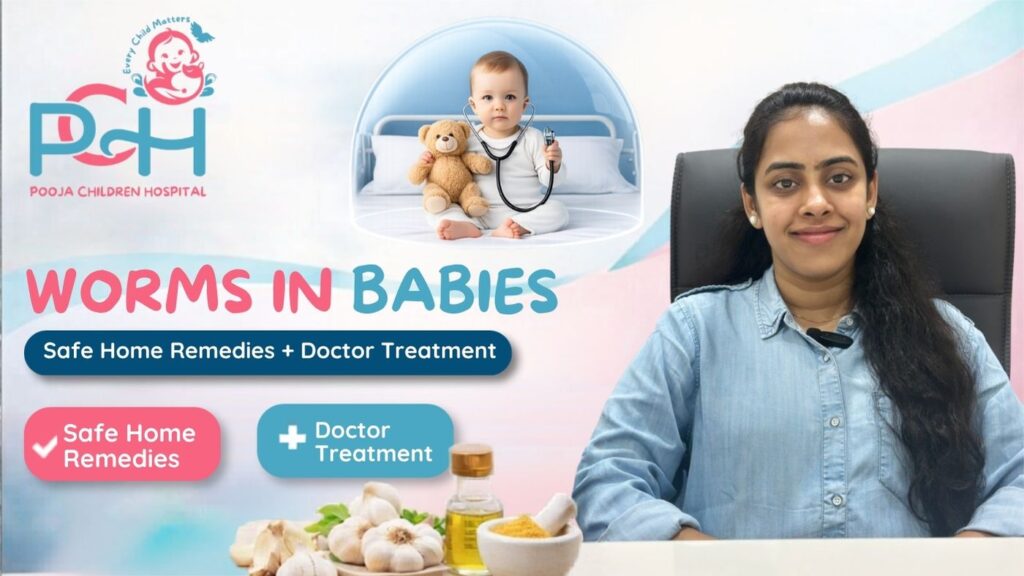
As a parent, noticing your baby feeling uncomfortable, crying more than usual, or having sleep disturbances can be worrying. One common but often overlooked reason is worm infection in babies.
Intestinal worms are quite common in children, especially in developing countries, due to environmental exposure. The good news is that with proper care, hygiene, and timely treatment, this condition can be managed safely.
In this guide, we’ll explain the signs of worm infection, safe home remedies for worms in babies, hygiene tips, deworming schedules, and when to consult a doctor.
At Pooja Children Hospital, we regularly help parents in Gujarat manage common child health concerns like stomach worms in kids with safe and effective treatment.
What Causes Worm Infection in Babies?
Worm infections usually occur when tiny worm eggs enter the baby’s body through:
-
- Contaminated food or water
-
- Dirty hands or nails
-
- Playing on unclean surfaces
-
- Contact with infected individuals
Babies and toddlers often put their hands or objects in their mouths, making them more vulnerable to infections.
According to the World Health Organization (WHO), soil-transmitted worms are common among children due to poor hygiene and sanitation exposure.
Signs of Worm Infection in Babies
Recognizing worm infection symptoms early helps prevent complications.
Common signs include:
1. Itching Around the Anus (Especially at Night)
This is a classic symptom of pinworms, causing disturbed sleep.
2. Irritability and Crying
Babies may become fussy due to discomfort in the stomach.
3. Poor Appetite
Your baby may refuse to feed or eat less than usual.
4. Disturbed Sleep
Frequent waking at night due to itching or discomfort.
5. Stomach Pain or Bloating
Some babies show signs of abdominal discomfort.
6. Visible Worms in Stool (Sometimes)
In certain cases, worms may be visible in the diaper.
If you notice these symptoms, it’s important to monitor closely and seek guidance if needed.
Safe Home Remedies for Worms in Babies
Parents often look for home remedies for worms in babies, but safety is the most important factor, especially for infants.
Important: Home remedies can help support hygiene and comfort but do not replace medical treatment.
1. Maintain Proper Hygiene (Most Important Remedy)
Good hygiene is the first and most effective step:
-
- Wash your baby’s hands frequently
-
- Keep nails short and clean
-
- Clean toys and feeding bottles regularly
-
- Wash bedding and clothes in hot water
This helps prevent reinfection and spread.
2. Keep the Anal Area Clean and Dry
Regular cleaning helps reduce itching and prevents eggs from spreading.
-
- Use warm water for cleaning
-
- Change diapers frequently
3. Breastfeeding Support
Breast milk supports immunity and helps babies fight infections naturally.
According to WHO, breastfeeding strengthens a baby’s immune system and protects against infections.
4. Safe Dietary Practices (For Older Infants)
For babies who have started solids:
-
- Give freshly cooked food
-
- Avoid raw or unwashed fruits/vegetables
-
- Ensure clean drinking water
Avoid Unsafe Home Remedies
Many traditional remedies may not be safe for babies:
-
- Do not give raw garlic, neem, or strong herbal mixtures
-
- Avoid over-the-counter treatments without doctor advice
-
- Never give adult deworming medicine
Always consult a pediatrician before trying any remedy.
Deworming Medicine & Schedule for Babies
When it comes to treating worms, deworming medicine prescribed by a doctor is the most effective solution.
Doctors usually recommend:
-
- Age-appropriate deworming medicines
-
- Single-dose or short-course treatment
-
- Repeat dose after a few weeks (if needed)
In India, deworming is often recommended:
-
- From 1 year of age onwards (based on doctor advice)
-
- Regular intervals in high-risk areas
The Government of India also runs National Deworming Day programs to reduce worm infections in children.
Why Doctor Consultation Is Important
While mild symptoms may seem manageable, proper diagnosis is very important.
A pediatrician can:
-
- Confirm if it’s a worm infection
-
- Identify the type of worms
-
- Prescribe the correct medicine
-
- Prevent complications
At Pooja Children Hospital Services, our pediatric experts provide safe and effective treatment for stomach worms in kids and guide parents on prevention.
When Should You See a Doctor?
Do not delay medical consultation if your baby has:
Warning Signs:
-
- Persistent itching or discomfort
-
- Severe stomach pain
-
- Vomiting or diarrhea
-
- Poor weight gain
-
- Worms visible frequently in stool
-
- Symptoms not improving
Early treatment prevents complications and ensures your baby stays healthy.
Prevention Tips for Worm Infection in Babies
Prevention is always better than cure. Follow these simple tips:
Wash Hands Frequently
Before feeding and after diaper changes.
Maintain Clean Surroundings
Keep floors, toys, and surfaces clean.
Trim Nails Regularly
Prevents accumulation of worm eggs.
Wash Fruits & Vegetables Properly
Especially for babies eating solids.
Use Safe Drinking Water
Boiled or filtered water is best.
Local Pediatric Care for Parents in Gujarat
If you’re a parent in Gujarat and worried about worm infection symptoms or your baby’s health, it’s always better to consult a specialist.
At Pooja Children Hospital, we understand how concerning it can be for parents. Our pediatric team offers:
-
- Accurate diagnosis
-
- Safe deworming treatment
-
- Guidance on hygiene and prevention
-
- Child-friendly care environment
Early care ensures your baby stays healthy and comfortable.
Conclusion
Worm infections in babies are common but manageable with the right care. While home remedies for worms in babies mainly focus on hygiene and comfort, medical treatment is essential for complete recovery.
By recognizing early symptoms, maintaining cleanliness, and consulting a doctor at the right time, parents can protect their child from discomfort and complications.
For expert care and guidance, trust Pooja Children Hospital, your partner in your child’s healthy growth.
FAQs
1. How to cure worms in babies naturally?
Natural methods mainly focus on hygiene and prevention, such as washing hands, keeping nails short, and maintaining cleanliness. However, complete cure usually requires doctor-prescribed deworming medicine.
2. How to deworm a baby at home?
Deworming at home should only be done using medicines prescribed by a pediatrician. Avoid using home or herbal remedies without medical advice, as they may not be safe for babies.
3. How to remove worms from a child?
Worms are treated using specific deworming medicines recommended by doctors. Along with medication, maintaining hygiene and cleaning surroundings helps prevent reinfection.
4. What are signs of worms in babies?
Common signs include itching around the anus, disturbed sleep, irritability, poor appetite, and stomach discomfort. In some cases, worms may be visible in stool.
5. How long do worms last in babies?
With proper treatment, worm infections usually clear within a few days. However, without treatment, they can persist and spread, making early medical care important.
6. What is the best age to deworm a baby?
Deworming is usually recommended after 1 year of age, depending on the child’s condition and doctor’s advice. Always consult a pediatrician before starting any deworming treatment.